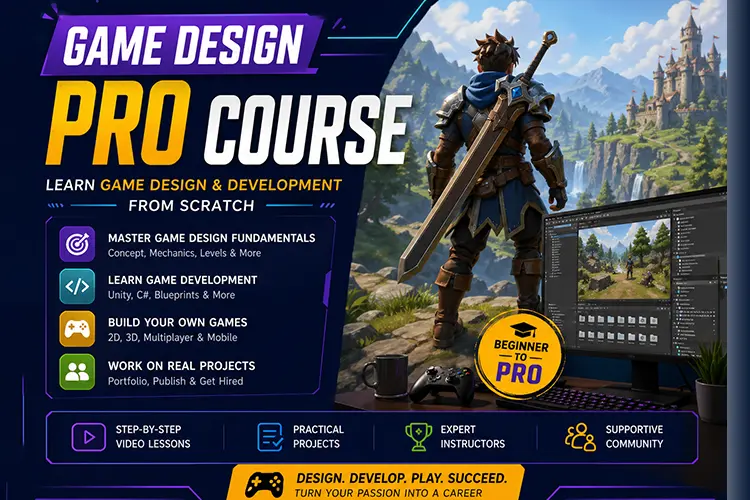
The gaming industry is growing faster than ever, creating massive opportunities for aspiring developers, designers, and creative artists. From indie mobile games to AAA console titles, game design has become one of the most exciting and profitable digital careers in the world.
If you dream about creating your own games, designing immersive gameplay systems, or building virtual worlds, learning game design is the perfect first step.
In this guide, you’ll learn:
- What game design really means
- Essential skills every beginner needs
- Best tools for modern game development
- Career opportunities in gaming
- How to start learning game design from scratch
- Why professional training accelerates success
Whether you want to become a Unity developer, level designer, gameplay programmer, or indie creator, this article will help you start your journey correctly.
What Is Game Design?
Game design is the process of creating gameplay mechanics, player experiences, systems, rules, characters, levels, and progression structures for games.
A game designer focuses on:
- Gameplay balance
- User experience
- Storytelling
- Player engagement
- Level flow
- Reward systems
- Game mechanics
Modern game development combines creativity with technical skills. That’s why professional game designers often understand programming, visual effects, animation, UI/UX, and game psychology.
If you want to master these skills professionally, check out our comprehensive training program here:
Why Game Design Is One of the Best Careers in 2026
The gaming market is now worth billions of dollars globally. Mobile gaming, PC games, VR experiences, and multiplayer titles continue growing every year.
Some reasons why game design is becoming a high-demand skill:
1. Massive Industry Growth
The global gaming industry keeps expanding rapidly with new studios, indie creators, and mobile publishers entering the market daily.
2. Multiple Career Opportunities
You can work as:
- Game Designer
- Unity Developer
- Gameplay Programmer
- Level Designer
- Narrative Designer
- Technical Artist
- VFX Artist
- UI Designer
3. Indie Game Development Boom
Today, even solo developers can create successful games using Unity and modern game engines.
4. Remote Work Opportunities
Many gaming companies now hire remote developers and freelance designers worldwide.
Essential Skills Every Game Designer Needs
Becoming a professional game designer requires learning both creative and technical skills.
Gameplay Design
You must understand:
- Player psychology
- Reward systems
- Difficulty balancing
- Level progression
- Core gameplay loops
Good gameplay keeps players engaged for hours.
Unity Game Engine
Unity is one of the most popular engines for mobile, PC, and indie game development.
Learning Unity helps you:
- Build cross-platform games
- Create 2D and 3D projects
- Implement physics systems
- Add monetization features
- Publish games faster
You can explore more development resources on our:
Importance of Visual Effects in Modern Games
Visual effects make games feel immersive, polished, and exciting.
Modern games use VFX for:
- Explosions
- Magic attacks
- Weather systems
- Fire and smoke
- UI animations
- Combat effects
Without proper effects, even a good gameplay system can feel boring.
If you want to improve your professional game visuals, explore our advanced VFX learning resources:
👉 [VFX Related Course Detail Page]
Best Tools for Beginner Game Designers
Unity
Best for:
- Mobile games
- Indie projects
- Multiplayer games
- Cross-platform publishing
Blender
Used for:
- 3D modeling
- Character creation
- Environment design
- Animation
Photoshop
Helpful for:
- UI design
- Textures
- Marketing assets
- Game icons
Visual Studio
Used for coding and scripting in Unity.
How to Start Learning Game Design from Scratch
Many beginners feel confused because game development involves multiple skills. The best approach is learning step-by-step.
Step 1: Understand Game Design Basics
Learn:
- Core mechanics
- Player motivation
- Game loops
- Level design fundamentals
Step 2: Learn Unity Development
Start building simple projects like:
- Endless runners
- Puzzle games
- Platformers
- Racing games
Practical projects help you learn faster.
Step 3: Study UI and UX
A clean user interface improves player retention and overall experience.
Step 4: Learn Game Monetization
Understanding monetization is essential for commercial success.
Popular monetization methods:
- Ads
- In-app purchases
- Battle passes
- Premium versions
- Rewarded video ads
Step 5: Build a Portfolio
Your portfolio matters more than certificates.
Create:
- Small playable games
- Gameplay demos
- UI concepts
- Level design samples
Common Mistakes Beginner Game Designers Make
Starting With Huge Projects
Many beginners try creating MMORPGs or open-world games immediately.
Start small instead.
Ignoring Optimization
Poor optimization destroys player experience.
Learn:
- FPS optimization
- Memory management
- Asset compression
Focusing Only on Graphics
Gameplay matters more than visuals.
Simple games with addictive gameplay often outperform visually complex projects.
Skipping Professional Learning
Random tutorials can slow your progress.
Structured learning paths save time and reduce confusion.
Benefits of Learning Through a Professional Game Design Course
Self-learning works, but professional guidance accelerates growth significantly.
A complete course helps you:
- Learn systematically
- Avoid beginner mistakes
- Build real projects
- Understand industry workflows
- Improve job readiness
Professional training also provides:
- Organized curriculum
- Practical exercises
- Industry techniques
- Career-focused learning
Future of Game Design and Development
Game development continues evolving with new technologies.
Trending areas include:
AI in Gaming
Artificial intelligence is changing:
- NPC behavior
- Procedural generation
- Personalized gameplay
Virtual Reality (VR)
VR gaming creates immersive experiences and new opportunities for designers.
Multiplayer and Online Games
Social gaming remains one of the biggest revenue-generating segments.
Mobile Gaming Growth
Mobile games continue dominating global downloads and revenue.
Unity developers remain highly valuable because Unity powers a huge percentage of mobile games worldwide.
Why Unity Is the Best Engine for Beginners
Unity remains one of the easiest and most powerful engines for beginners.
Benefits include:
- Large community support
- Massive asset ecosystem
- Easy learning curve
- Cross-platform publishing
- Excellent documentation
You can create:
- 2D games
- 3D games
- Multiplayer games
- AR/VR experiences
- Simulation games
Career Opportunities After Learning Game Design
Once you gain proper skills, you can work in multiple industries.
Game Studios
Join indie or professional studios.
Freelancing
Offer services like:
- Unity development
- Game UI design
- Level creation
- VFX design
Asset Store Publishing
Sell:
- Game templates
- Art assets
- UI packs
- VFX systems
Indie Publishing
Launch your own games on:
- Google Play
- Steam
- App Store
Final Thoughts
Game design is no longer just a hobby. It has become a powerful digital career with endless creative and financial opportunities.
The best time to start learning game development is now.
By mastering:
- Gameplay systems
- Unity development
- Visual effects
- Player psychology
- UI/UX principles
you can build professional-quality games and create a successful career in the gaming industry.